Intro
DIALOG CITY ART FOR PUBLIC RESIDENCY PROGRAM invited professional artists to develop ideas for urban interventions addressing local or global issues of significance to the respective urban society through a participatory approach. The participating European cities were Mondoví (IT) in 2023, Graz (AT) in 2024, Aschaffenburg (DE), and Montpellier (FR) in 2025.
Mondovi (Italy)
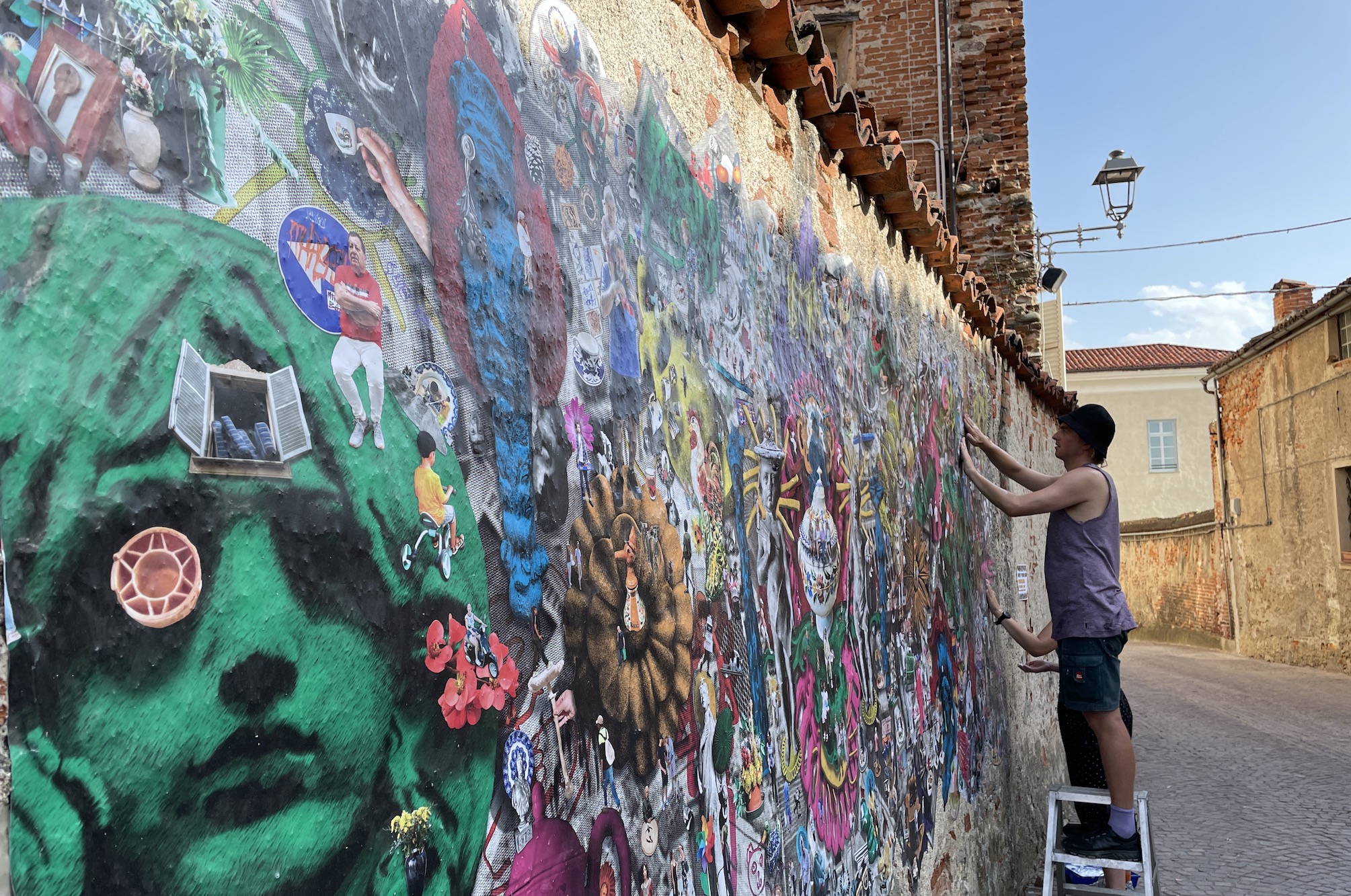
The project NEWS FROM HOME by Anne Fehres and Luke Conroy, an artist duo specializing in socially engaged art practice, was selected for the first residency in Mondoví, Italy. During their four-week stay, they immersed themselves in the community, conducting research, collaborating with locals, and observing diverse community stories. Their focus was on capturing both objective and subjective narratives that blend global and local perspectives.
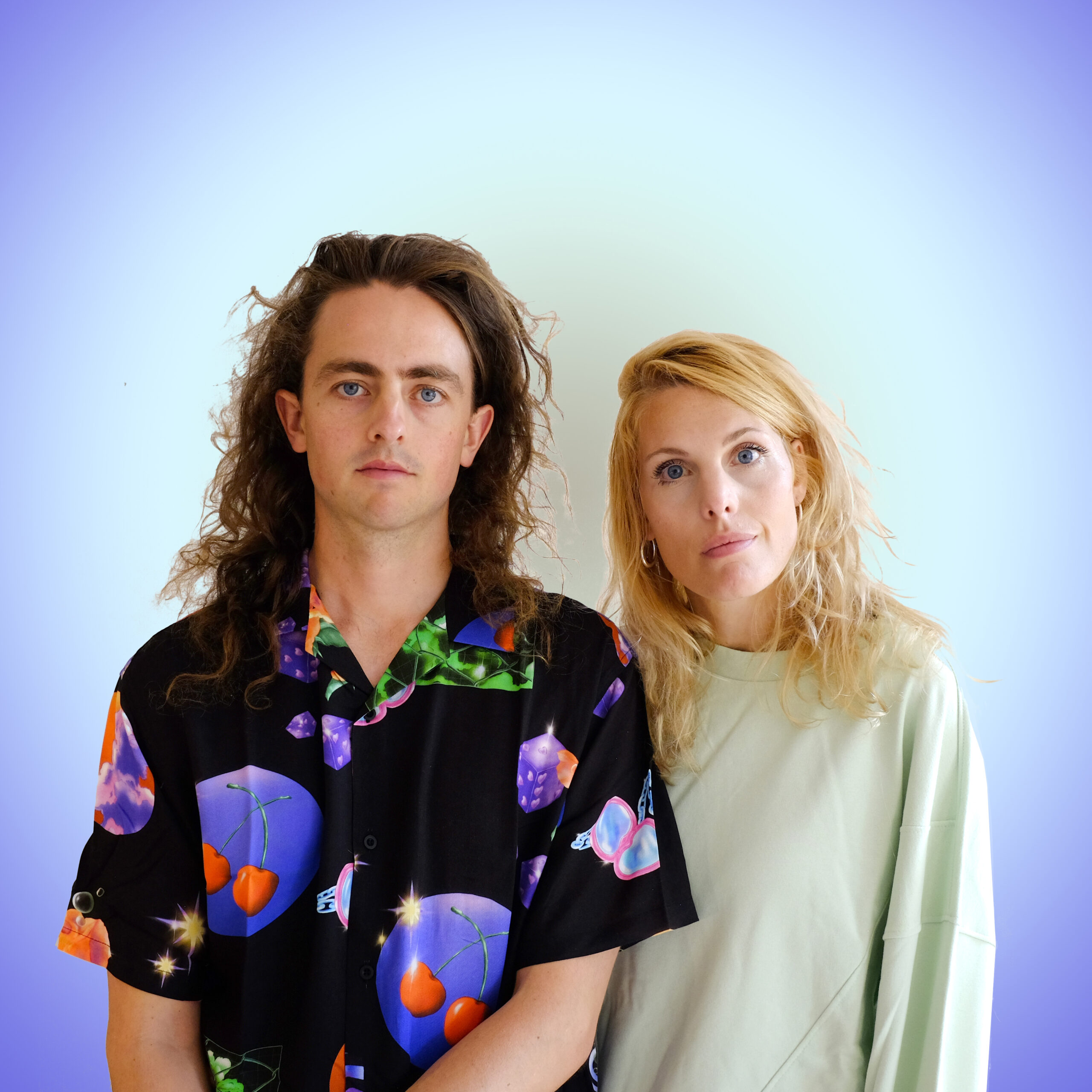
The artist duo Anne Fehres and Luke Conroy
The culmination of their residency was a mural depicting these stories, created using large format photographic composition on billboard paper affixed to an old wall in Mondoví’s medieval centre. The artwork was unveiled on July 20, 2023, as part of the HYBRID FESTIVAL and will remain in public space until time naturally fades it away.
Their project exemplified a successful blend of artistic vision with community engagement, contributing significantly to the cultural landscape of Mondoví while fostering dialogue and participation among its residents.
The Publication about this project is available here.
Graz (Austria)
The second DIALOG CITY ART FOR PUBLIC RESIDENCY, titled LONGINGS, featured visual artist Lenka Holíková, who has lived and worked between Europe and Mexico. Her art focuses on migration and borders, reflecting her upbringing in a border region near Germany during the East-West division. Lenka’s recent work addresses the broader issue of forced migration, particularly relevant in Central Europe and Austria, which serves as a transit hub for migrants fleeing conflict and hardship.
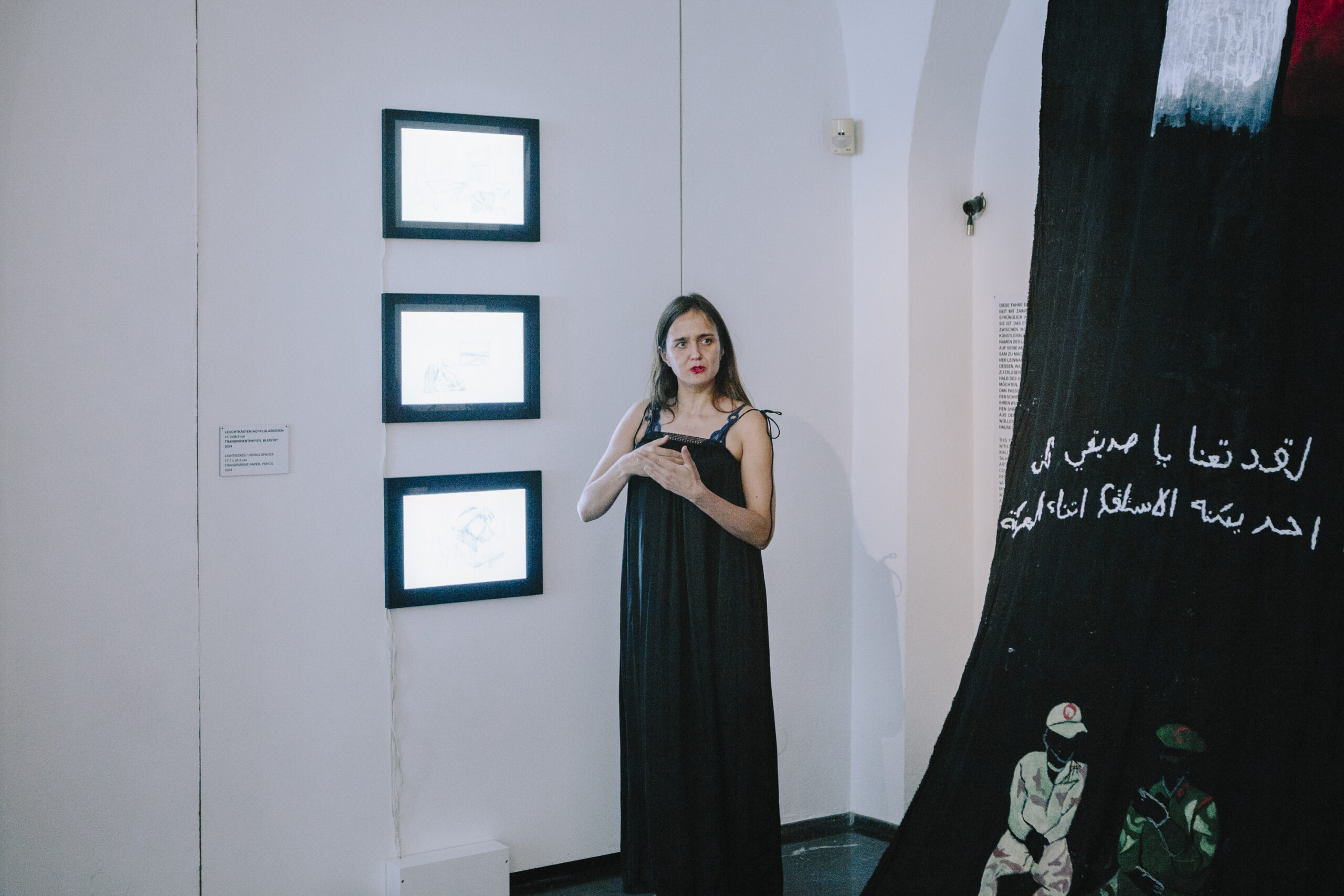
The artist Lenka Holíková, in Graz
Austria’s historical context, shaped by its past and recent conflicts, influences current attitudes toward migration, often exacerbated by populist movements that foster anti-immigrant sentiment. Media portrayals frequently highlight negative aspects of migration, affecting public perception.
Holíková’s project connects research with artistic expression, emphasizing migrant narratives linked to Graz through collaboration with the Graz Museum and individuals who have sought refuge there. Visitors were invited to witness this at the Graz Museum from 6 June to 1 September 2024.
The Publication about this project is available here:
Montpellier (France)
The FUTURE FESTIVAL in Montpellier was realized in collaboration with and under the umbrella of the Festival of Living Architecture (FAV), which in 2025 took place under the theme of La Gourmandise. For two decades, FAV has invited architects, urban and landscape planners each summer to explore the connection between architecture and an annual theme, transforming the courtyards of Montpellier’s townhouses with installations.
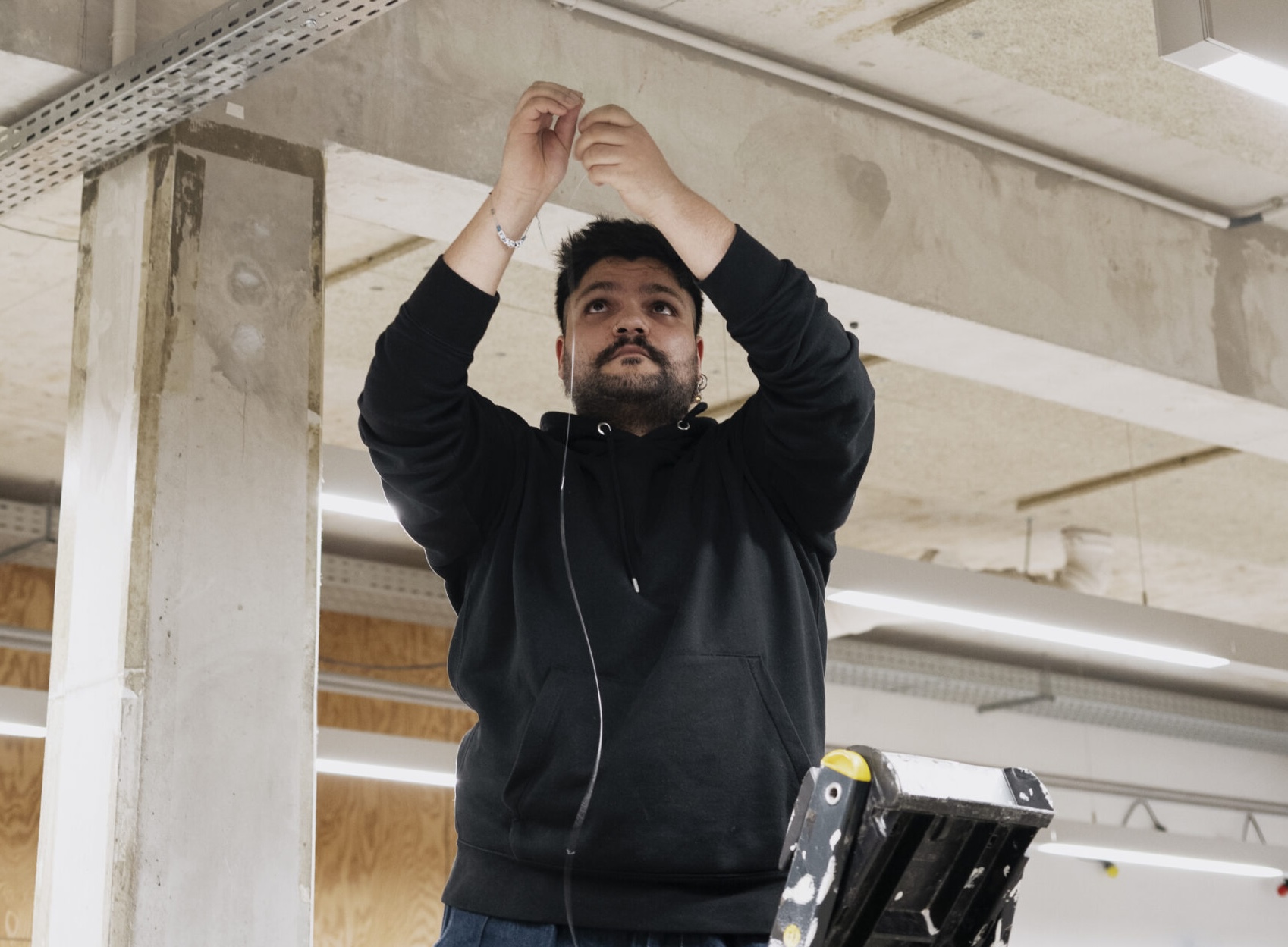
The artist Alexandre Benetas-Ottobrini
During his residency, Alexandre Benetas-Ottobrini created a narrative buffet in the form of a walk-in installation made of salt, moss, projection, and an old refrigerator. Inspired by the Archaeological Museum of Lattara south of Montpellier and the nearby saltworks of Aigues-Mortes, he devised the “Institute for Post-Sidereal Research,” an entity dedicated to studying altered or dissolved societies.
Before entering the installation, the artist, in his fictional role as an archivist, asked visitors a few fundamental questions: What was last eaten? What is archived? How is overall well-being? What is the personal acceptance of change between ingestion and subsequent excretion? The survey turned the work into a living performance about leaving traces.
The Publication about this project is available here:
Aschaffenburg (Germany)
Aschaffenburg has a rich tradition in paper manufacturing and processing—an important part of the city’s cultural and economic identity. During her art residency, Lisa Maria Baier explored the historical, industrial, and social contexts of paper history—and discovered a notable absence in the city archives: records about women’s work in the paper industry are scarce.
This lack of documentation inspired Baier to intervene creatively. She responded by producing photographic artifacts that depict women at work in the factories, using both specially trained AI models and her own image stock to reconstruct what was missing from historical records.
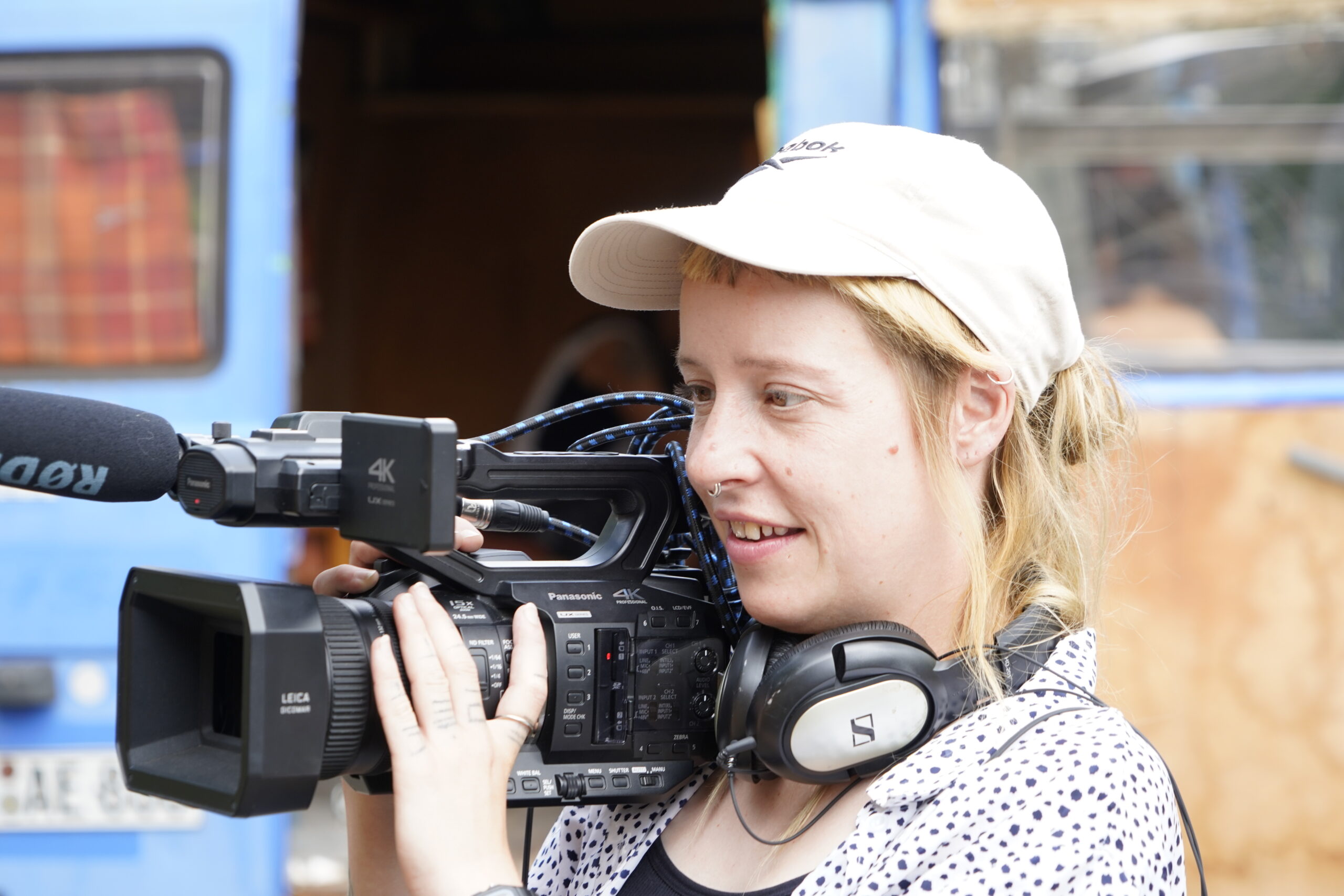
The artist Lisa Maria Baier
At first glance, these images resemble authentic photographs from the past, capturing women’s roles in the paper industry. Yet upon closer inspection, it becomes clear that Baier intentionally creates a point of reflection – bridging analogue history with digital innovation.
Through her work, Baier draws attention to what is often absent from archives, raising fundamental questions about how women’s lives are represented in our collective memory. Why were women in industry so rarely recorded? By what standards was historical relevance determined at the time?
The Publication about this project is available here: