Skip to content

Dialog City Festivals

The first of the Hybrid Festivals took place in Mondovì, Italy (2023), bringing together artistic experimentation, participatory creation, and digital connection. Over three days, the event combined live-streamed performances and collaborative workshops with citizens, blending physical presence and virtual engagement across borders. A highlight was a 24-hour performance format that unfolded throughout the city, encouraging both local participation and remote viewing.

In Graz, the second Hybrid Festival (2024) explored the intersections of memory, technology, and civic imagination. Over several days, the program delved into themes of personal digital archiving and collective foresight, inviting participants to reflect on how cities preserve and project their identities into the future. The festival culminated in launching the Citizen Archive Platform, a collaborative tool designed to safeguard shared urban histories while enabling citizens to actively contribute to their evolving story.

The Hybrid Festivals evolved into Future Festivals in 2025, marking a shift toward more tangible, community-rooted engagements. In Montpellier, this new format took shape within a historic building in the old town, where an abandoned youth hostel was reimagined as a space for cultural renewal and temporary housing. Within this restored setting, artistic residencies and architectural interventions came together under the theme of sensorial pleasure and shared experience, highlighting the link between urban revitalization, creativity, and social inclusion.

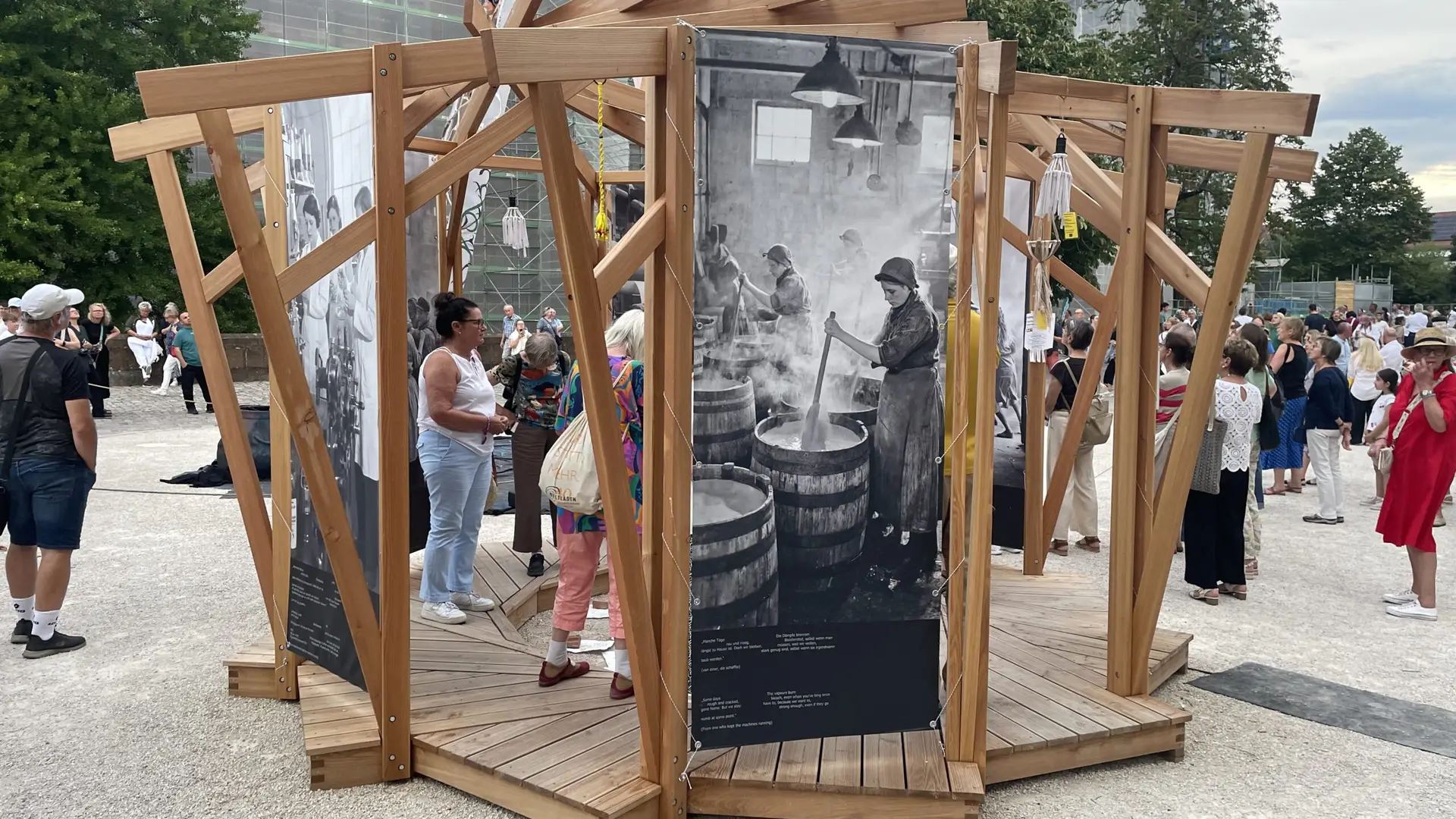
The Future Festival in Aschaffenburg continued this trajectory by introducing a temporary pavilion near the city’s historic core. Serving as both an artistic workspace and a public meeting place, the pavilion became a hub for dialogue between residents, artists, and researchers. Exhibitions, performances, and citizen-led discussions centered on themes of transformation, industry, and community participation, transforming the site into a living laboratory of ideas for the future city.

THE FUTURE PAVILION stands as a lasting symbol of these encounters—an adaptable 15 m² structure shaped by principles of reciprocity and shared creation. It offers a space for gathering, exchanging, and celebrating togetherness. Designed for assembly and reuse, it can be reconstructed in different contexts, embodying both sustainability and connection. Over time, its modular wooden frame may evolve into a greenhouse, a nurturing extension where ideas and relationships continue to grow. Economical in resources yet rich in meaning, the Pavilion reflects the essence of the Future Festivals: open, collaborative, and rooted in the shared desire to shape a more connected urban future.
Dialog City Exhibition

Shape Your City!

Intro

An exhibition on display from June 13 to September 14, 2025 in Aschaffenburg

The Aschaffenburg City and Abbey Archive organized an exhibition about the project DIALOG CITY, which presented the organization, development, and activities of the initiative through images, texts, and films — from the hybrid festivals in Mondovì and Graz to the creation of a digital citizens’ archive and the design of a Future Literacy Methodology.

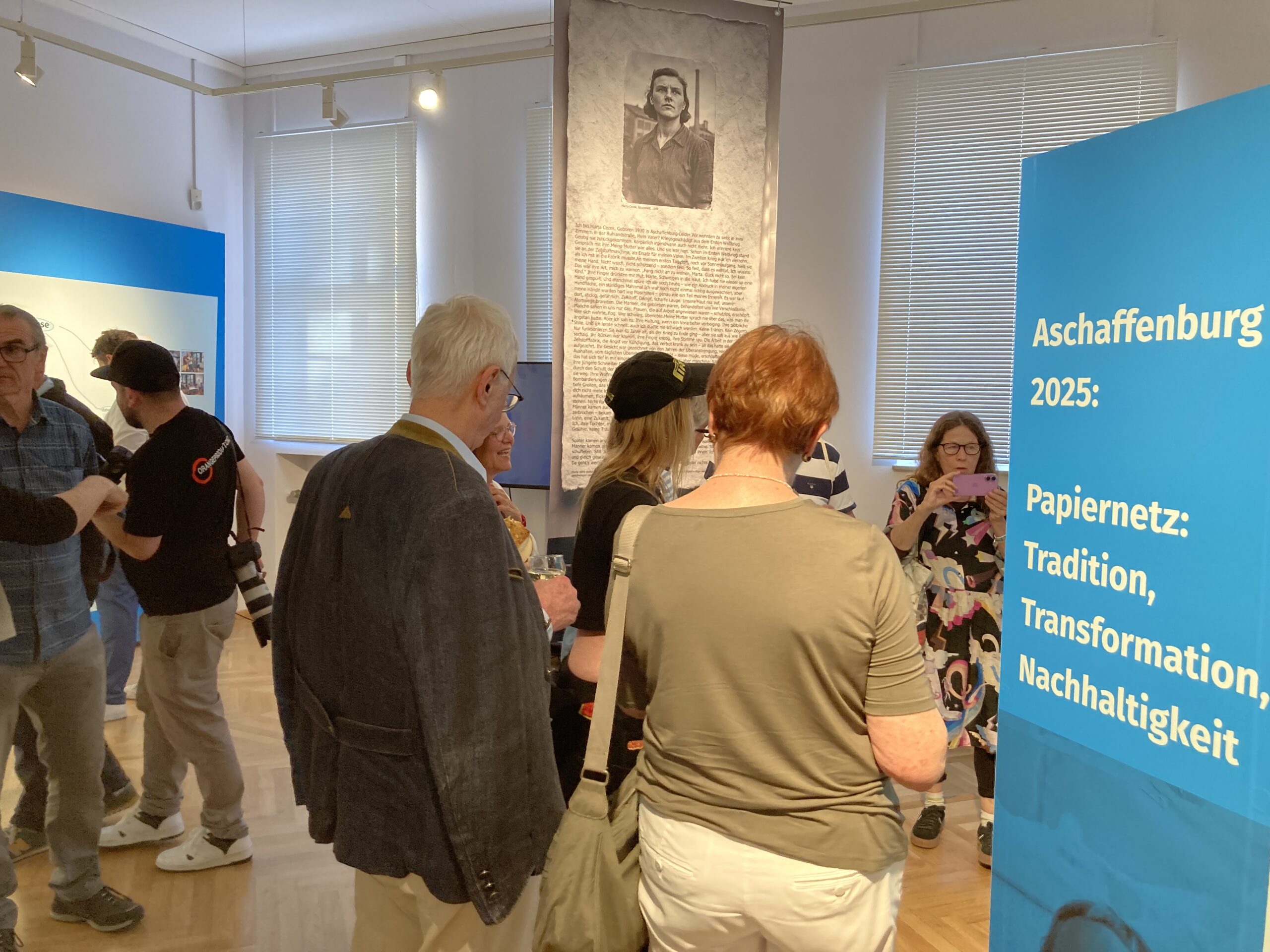
Officially part of the Aschaffenburg Cultural Days and the DIALOG CITY Future Festival, the exhibition gave more than 1,500 visitors the opportunity to learn about the project and its participants, reflect on the digital transformation of cities, and take away valuable insights.

The exhibition began with the forward-looking guiding question: “How do we want to live in the future?” Its concept was primarily based on providing insights into the project’s work and organization, while also highlighting the challenges of digitization in the cultural sector. The explanatory texts, enriched with visual material, described the partner organizations and the project’s individual components — such as the festivals, the Citizen Archive Platform, and the Futures Literacy Toolkit.

The exhibition also emphasized the local dimension of the project in Aschaffenburg: it presented the city’s digital strategy, the Digitalladen, and digital initiatives such as heimat:hub. A map illustrated the connections between the project’s partner organizations, spanning from Greece to France and from Germany to Austria and Italy.

Another focal point of the exhibition was the four artist residencies in Mondovì, Graz, Aschaffenburg, and Montpellier. The impressive “Wall of Mondovì”, created by Anne Fehres and Luke Conroy, adorned the exhibition space, as did the AI-generated fabric panels by Lisa Maria Baier, which made visible the women workers of Aschaffenburg’s paper industry. The “Salt of Montpellier”, developed by culinary artist Alexandre Benetas-Ottobrini during his residency, was also featured. In addition, videos documented the artists’ working processes.

A prototype developed during the Game Jam at the Future Festival (July 2025) also found its way into the exhibition space, inviting visitors to engage playfully with ideas about the cities of the future. In an interactive corner, guests could reflect on the future roles of archivists.

Overall, the exhibition demonstrated how a culture of dialogue can shape and guide the creative and sustainable development of European cities. In doing so, it helped raise awareness of social and cultural developments — such as the use of artificial intelligence — taking place across Europe.